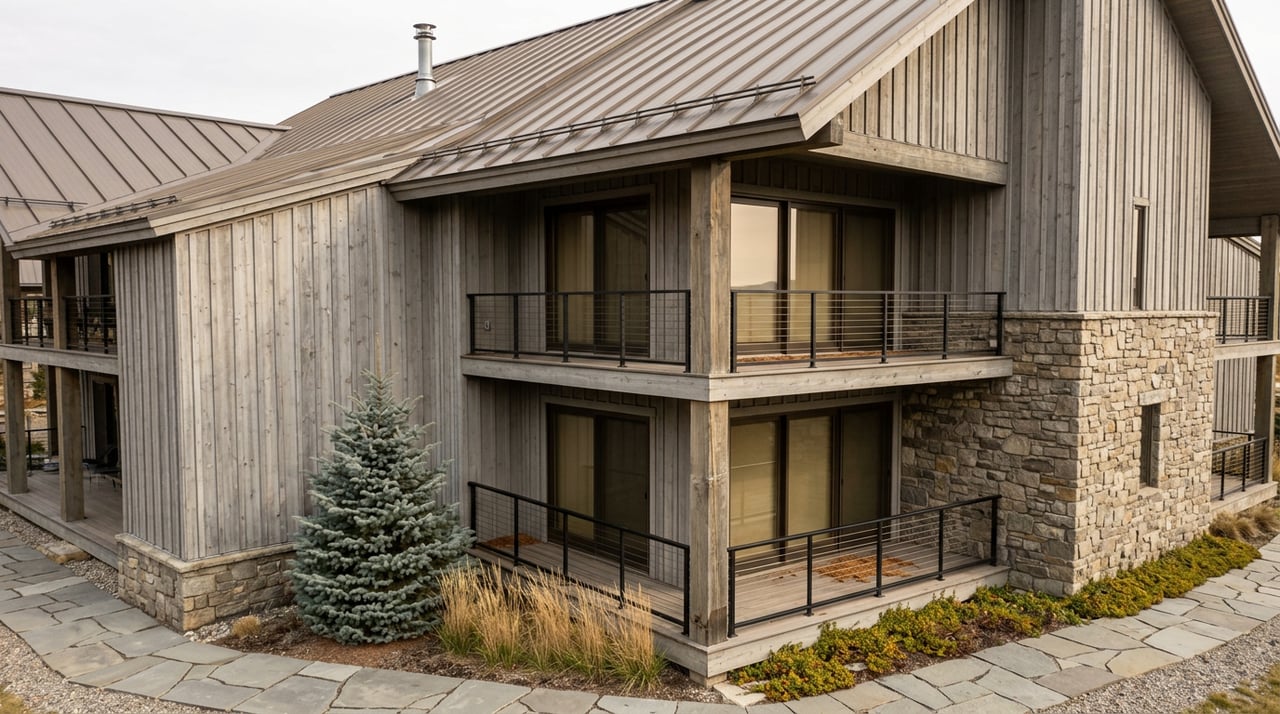
Steamboat Springs Condos: Why the Reserve Study Now Matters More Than the View
A slopeside unit at Ski Time Square and a newer building three blocks away can list for the same price per square foot and still be two completely different financial commitments. The difference will not show up in the listing photos. It shows up in a document most buyers never ask to see until an agent tells them to: the reserve study.
That document just became a bigger deal in Colorado, and Steamboat's base area condo stock is exactly where the change lands hardest.
Until January 1, 2025, Colorado's Common Interest Ownership Act asked homeowners associations to have a written policy about reserve studies. The policy could say the association planned to do a study every ten years, or never, or only when the board felt like it. As long as the policy existed on paper, the association was in compliance. A reserve study itself was optional.
House Bill 22-1387 ended that arrangement. It requires common interest communities with major shared components, meaning roofs, elevators, siding, pools, and the other big-ticket items every condo association is responsible for, to actually conduct reserve studies rather than just write a policy about conducting them someday. Colorado joined a short list of states, including California and Florida, where a reserve study is a legal expectation rather than a courtesy.
The legislature kept building on it. In April 2026, Governor Polis signed House Bill 26-1099, which closes a gap that mattered most for anyone buying into a brand new Steamboat development. It requires the declarant, meaning the developer still in control before the association takes over, to commission a professional reserve study projecting maintenance and replacement costs over a 30-year period and hand that study to the association before stepping away. New construction no longer gets a grace period where nobody has done the math on what the building will cost to maintain in year fifteen.
Steamboat's base area was built out in waves, and the wave that gave the mountain its character, the Ski Time Square era, is now forty-plus years old. Buildings like Torian Plum went up in the 1980s ski boom and have been renovated since, but the bones, the roof systems, the plumbing risers, the elevators, are original-era infrastructure carrying decades of freeze-thaw cycles and hail seasons. Newer base area product, including buildings like Highmark and complexes like Clock Tower Square, is working from a different maintenance clock entirely.
That age gap used to be invisible on a listing sheet. A reserve study makes it visible, because it forces an association to put a number next to every major component and ask whether current dues are actually funding its eventual replacement. An association that has been collecting dues based on a policy statement instead of an engineer's projection may discover, now that the study is mandatory, that it has been underfunded for years without anyone flagging it.
Reserve funding gaps used to be a slow-moving problem. Insurance costs have made them fast-moving.
Condo association insurance premiums across Colorado have roughly doubled since 2022, and mountain resort markets, Vail, Breckenridge, Aspen, and Steamboat among them, run some of the highest HO-6 premiums in the state, commonly $700 to $1,500 or more a year, driven by remote-location repair costs, wildfire interface exposure, and a limited pool of contractors who can work at altitude. When an association's master policy deductible climbs alongside those premiums, and the reserve fund is not large enough to absorb it, the gap gets divided among every unit owner as a special assessment. Colorado hailstorms alone have produced special assessments running $5,000 to $30,000 per unit in condominium communities across the state.
None of that is exotic. It is the same math every Colorado condo owner is living through right now. What changes for a Steamboat buyer is that a mandatory reserve study is the first document that tells you, before you own the problem, whether your building is prepared for it or is about to ask you to be.
Colorado does not leave buyers guessing here. Under the Common Interest Ownership Act, every association must furnish a resale certificate within 14 days of a request, and state law spells out twelve specific things it has to disclose. Among them: current assessments by unit type, including any special assessments already levied, the association's annual financial statements with reserve fund amounts for the prior fiscal year, the results of the most recent financial audit or review, and a full schedule of the association's insurance policies, including deductibles and expiration dates.
This certificate exists precisely so a buyer is not relying on a listing agent's summary or a seller's memory of what the board discussed last spring. It is the legal mechanism that turns "ask about the HOA" from a vague suggestion into a document with a deadline and a state statute behind it.
Steamboat's condo segment had a rough 2025 by the numbers. It was the most affected corner of the market, with days on market up 183 percent and absorption falling from 112 percent to 45 percent, alongside a substantial jump in active listings. The market outlook that reported those figures also raised a possibility worth sitting with: rising HOA dues may be part of what is softening demand, not just a larger supply of units for sale.
That reframes the slowdown. A condo that sits longer is not automatically overpriced. It may be a condo where the dues jumped, or where a buyer's agent pulled the reserve study and found a funding gap the seller had not mentioned. In a market where that document is now mandatory, expect more of those conversations to happen earlier, before an offer, rather than during an inspection period.
Does every Steamboat condo have a reserve study yet? Not necessarily. The law took effect for most associations in January 2025 and the newer transition-period requirement only started this year, so some buildings, particularly smaller or older associations, may still be catching up. That is exactly why asking for the date of the most recent study matters more than assuming one exists.
Is a healthy reserve fund the same as a low HOA fee? No, and this is where buyers get tripped up most often. A low monthly fee can mean an association that is genuinely well run, or it can mean an association that has been deferring the hard decisions. The reserve study is what tells you which one you are looking at.
Does this apply to single-family HOAs too, or just condos? The reserve study requirement applies broadly to common interest communities with major shared components, which covers most condominium and townhome associations. Standalone single-family HOAs without shared structural elements are a different situation, and the disclosure obligations that matter most, like the resale certificate, are specific to common interest ownership.
A reserve study will not tell you whether you love the view or the walk to the gondola. It will tell you whether the building behind that view is financially prepared for the next roof, the next elevator modernization, the next hailstorm. In a market where that document just went from optional to required, it deserves the same attention as the floor plan.
If you are weighing a Steamboat condo purchase, or wondering what your own association's paperwork actually says, Kelly Conway can walk through the reserve study and resale certificate with you before you write an offer. Let's Connect.
Stay up to date on the latest real estate trends.


Buying
Should you rent or purchase a home? Find out by asking yourself the following questions.
Kelly Conway provides personalized real estate guidance backed by local expertise and a deep understanding of the Steamboat Springs market. Whether buying, selling, or investing, clients receive dedicated support, strategic insight, and a seamless experience tailored to their unique real estate goals.

KELLY CONWAY
655 Yampa St Unit C Steamboat Springs, CO 80487