Buying Land Near Steamboat Springs? Ask Who Already Owns the Right to Develop It
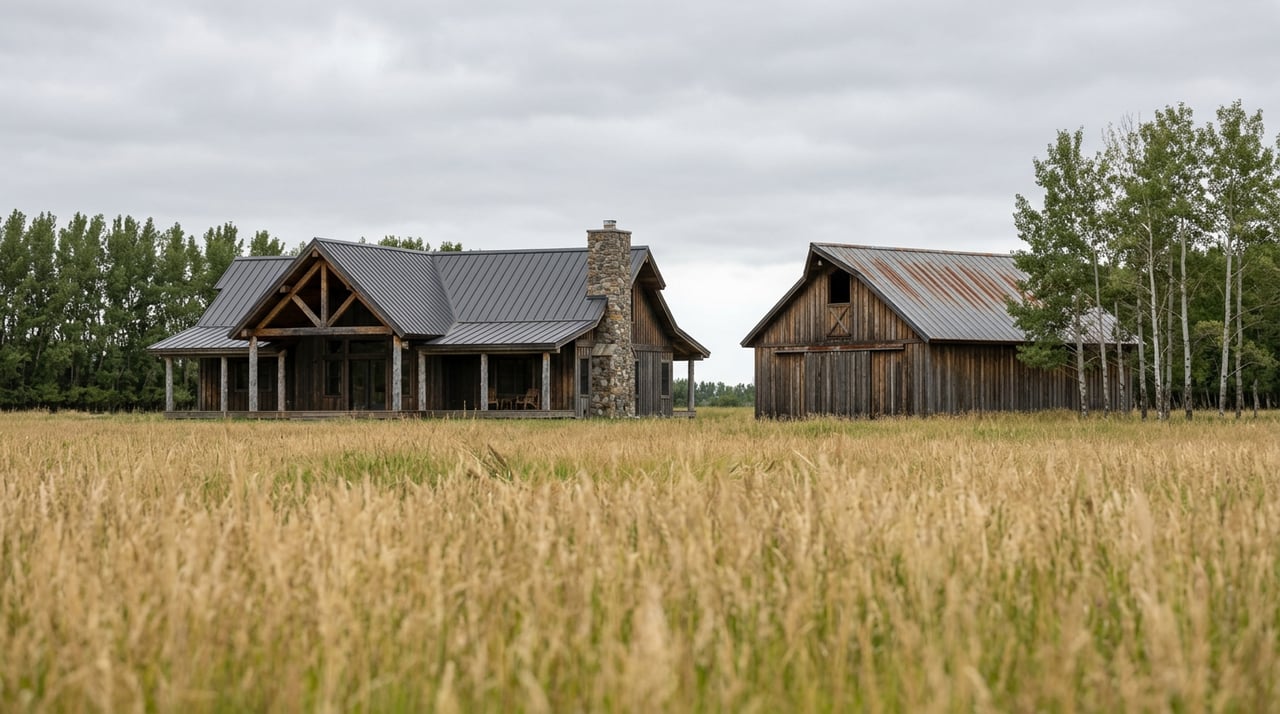
Picture the scene that plays out every summer somewhere in Routt County. A buyer stands on a rise of open hay meadow outside Yampa, admiring the sightline to the Flat Tops, already sketching where a second homesite or a guest cabin might sit. The listing photos show green pasture and a ribbon of creek. Nothing in the photos shows the deed restriction that may already sit on the title
That restriction does not show up in a drone shot. It shows up in a title search, and by then a buyer has usually already fallen for the view.
Routt County voters approved a property tax increase in 1996 to fund something called the Purchase of Development Rights program, reaffirmed the funding in 2005, and have since extended the mechanism through 2035 via a 1.5 mill levy on county property taxes. Routt County's 2025 PDR Annual Report says the program purchases development rights from willing landowners in exchange for a perpetual conservation easement that remains in place if the land is sold or transferred.
Since the program began issuing easements in 1997, Routt County has helped fund conservation easements on more than 68,000 acres, at a cost of roughly $32 million in public money. The nonprofit that handles most of these transactions, the Colorado Cattlemen's Agricultural Land Trust, now holds easements on more than 83,000 acres in the county alone.
That is not a rounding error in a rural county. It is a meaningful share of the private ranchland within reach of Steamboat.
The pace has not slowed. Two closings in October 2025 alone reshaped how much developable acreage sits near town:
In a report by Steamboat Radio, Susan Larson framed her family's decision simply, saying the effort carries forward her family's longstanding commitment to the land and water. That sentiment, repeated across nearly every closing the land trust announces, is not sentimental packaging. It is the actual mechanism. The county is paying real money for a promise that never expires.
This is the detail that catches buyers off guard, and it has nothing to do with zoning maps or comprehensive plans. Routt County's 2026 draft conservation-easement deed says the deed is recorded in county records and runs with the land in perpetuity, binding successors.
A buyer who closes on an eased parcel is not inheriting the seller's opinion about development. They are inheriting a legal instrument that a title company will confirm, a land trust will monitor annually.
Not every landowner wants a permanent, irrevocable trade. Routt County's Land Preservation Subdivision handout says the process is available to property zoned Agriculture and Forestry with at least 70 acres. It is voluntary and works differently from a perpetual easement.
The distinction matters for anyone comparing two similar-looking parcels. One might carry a Colorado Cattlemen's easement. The other might carry a Land Preservation Subdivision agreement. Both show up as restricted acreage in a listing description. They are not the same restriction, and they do not carry the same long-term value.
Here is the part that changes how a buyer should read the market. Sixty-eight thousand protected acres is not scenery preserved at no cost to buyers competing for developable ground.
The city itself is now playing the same game closer to town. The Steamboat Pilot reported that in July 2026, Steamboat Springs completed a $5.25 million purchase of the 187.84-acre Slate Creek property adjacent to the Slate Creek neighborhood parcel, using Purchase of Development Rights funds to extinguish development rights on roughly 131 of those acres through an easement held by Colorado Open Lands. The remaining acreage is being set aside for active recreation. Even land inside the growth corridor near town is now subject to the same permanent removal of development potential that has shaped the county's ranchland for nearly three decades.
For a buyer evaluating raw acreage as an investment or a future homesite, the practical takeaway is straightforward. If subdivision potential or future building rights matter to the purchase, that potential has to be confirmed before an offer, not assumed from the view. If the goal is a working ranch, income property, or a long-term hold with no subdivision ambitions, an eased parcel can actually be the more sensible purchase, often priced to reflect its agricultural use rather than its speculative upside.
A title search will surface a recorded easement, but the specifics take a closer look. Before a contract goes in on Routt County acreage, it is worth confirming whether the parcel carries a Colorado Cattlemen's easement, a county Purchase of Development Rights easement, a Land Preservation Subdivision agreement, or none of the above. Each carries a different answer to the question of what can still be built, and each affects how the parcel should be priced, financed, and eventually resold. An attorney or title company familiar with Routt County's easement history can confirm which category applies and what building envelopes, if any, remain.
None of this makes Routt County land a harder place to invest. It makes it a place where the fine print carries more weight than the photographs, and where three decades of a deliberate public program have quietly reshaped what raw acreage actually means near Steamboat. Buyers who understand which parcels still hold their full development potential, and which ones traded that potential away for good, are the ones who end up with the land that fits what they actually want to do with it.
If you are evaluating ranch, recreational, or investment acreage in Routt County and want a clear read on what a specific parcel's title actually allows, Kelly Conway works this market from both the residential and land side, with the local relationships to help confirm what a property can and cannot become before you make an offer. Let's Connect.
This article is general information, not legal, tax or financial advice. Consult a qualified professional about your situation.
Stay up to date on the latest real estate trends.

Kelly Conway provides personalized real estate guidance backed by local expertise and a deep understanding of the Steamboat Springs market. Whether buying, selling, or investing, clients receive dedicated support, strategic insight, and a seamless experience tailored to their unique real estate goals.
KELLY CONWAY
655 Yampa St Unit C Steamboat Springs, CO 80487